When you have diabetes and your blood sugar isn't under control, it makes it hard for your body to heal. Feet are a common site of problems. Even small foot problems can turn into bad infections. If not treated, they can lead to loss of a foot. Sometimes they can even become life-threatening. Quick care by your doctor is needed to protect your foot.
Getting treatment
Sometimes infections can spread throughout the feet and up the leg. To treat a severe infection, you may need to stay in the hospital. You may get antibiotics through an I.V. (intravenous) line. You may see a doctor who focuses on caring for infections. If the infection is a serious risk to your health, you may need surgery.
The goals of foot surgery
Surgery is done to remove the infection and protect your foot or leg. Your surgeon may take a small amount of dead tissue from the infected area. Sometimes they may need to remove toes or larger amounts of tissue. Surgery to fix or bypass arteries that have been damaged by diabetes may help. This can bring more blood to the infected area. You may have surgery in a hospital or outpatient surgery center. You may need blood tests, X-rays, MRI, or other tests. These may be done to see if the infection has spread to other areas, such as the bone.
The length of your hospital stay depends on the surgery and how well you're healing. While you're healing, you will need to limit your activity for a while. Once you're back home, a home health nurse will come see you. Follow all instructions and be sure to follow up with your doctor as advised.
Wound care after surgery
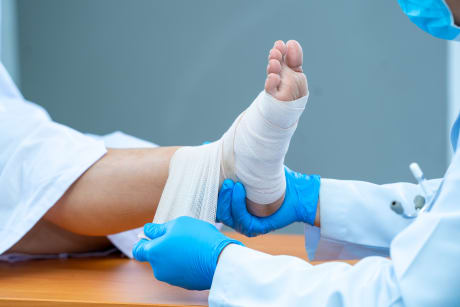
Good wound care after surgery helps keep your foot free of infection. It also aids healing. These tips can help you care for your wound:
- Change your dressing every 6 hours, or as directed by your doctor. Report any redness, swelling, or fluid from the wound to your doctor.
- You may need I.V. antibiotics. This is to help control the infection. Other medicines may be used to help your foot heal faster. Take these as prescribed.
- A home health nurse may help with your dressings or I.V. antibiotics at home.
- If needed, your doctor may send you to a wound care facility. They treat ulcers and infections that are hard to heal. You may be given antibiotics or other medicines that help fight infection. You'll learn how to care for the wound at home.
- You may be told to keep your foot raised as much as possible to reduce swelling. Swelling slows wound healing. You may also be told to not put weight on the foot during healing.
Blood sugar control during recovery
Do what you can to keep your blood sugar in your target range. This will help wound healing. The physical and emotional stress of a wound may cause changes in your blood sugar. If you have trouble with blood sugar control, call your doctor.
Online Medical Reviewer: Chris Southard RN
Online Medical Reviewer: Rajadurai Samnishanth Researcher
Online Medical Reviewer: Rita Sather RN
Date Last Reviewed: 06/05/2026
© 2000-2026 The StayWell Company, LLC. All rights reserved. This information is not intended as a substitute for professional medical care. Always follow your healthcare professional's instructions.