Diabetic retinopathy is a complication of diabetes. It may lead to vision loss or blindness. It affects the blood vessels in your retina. This is a light-sensitive tissue in the back of the eye. Treatment may help slow the progress of diabetic retinopathy. Your treatment plan depends on your condition. Women who have diabetes or gestational diabetes are at higher risk of having diabetic retinopathy. They need to be watched most closely. You may need frequent exams to watch for changes. You may also need laser treatment and other procedures.
Watching your vision
At first, your healthcare provider may simply want to watch your vision changes. In some cases, you may also have tests done. These may include:
-
An angiogram. This test uses a special dye to make detailed images of the retina. These images help your provider decide if you need special treatments.
-
Ocular coherence tomography (OCT) testing. This uses light waves to see if fluid is leaking into some parts of the eye. It can also look at the thickness of the retina.
-
Photos of your retina. These can show any changes in your retina since your last checkup.
-
Dilated eye exam. You'll be given eye drops to widen (dilate) your pupils. Then you'll be checked for diabetic retinopathy and other eye problems.
-
Visual acuity test. This checks how clearly you see. Your provider will ask you to read letters that are up close and far away.
Types of treatment
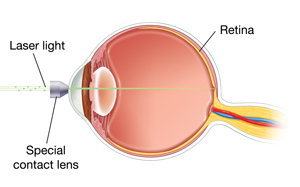
Special treatments can help stop bleeding. They can also slow or stop new vessel growth. And they can save vision and even make it better. The type of treatment you get depends on your condition:
-
Laser treatment. This can reduce swelling and help stop leaking blood vessels. It can also limit abnormal vessel growth. Sometimes more than 1 treatment is needed.
-
Surgery. This can remove some or most of a gel-like fluid inside the eye (the vitreous). It is replaced with other fluids. This may help if the vitreous gets filled with blood. This makes it hard to see. Surgery can also remove scar tissue that is causing poor vision.
-
Medicines injected in the eye. These can help decrease swelling of the retina. And they can slow the abnormal growth of blood vessels.
Online Medical Reviewer: Chris Southard RN
Online Medical Reviewer: Rajadurai Samnishanth Researcher
Online Medical Reviewer: Rita Sather RN
Date Last Reviewed: 03/01/2024
© 2000-2026 The StayWell Company, LLC. All rights reserved. This information is not intended as a substitute for professional medical care. Always follow your healthcare professional's instructions.