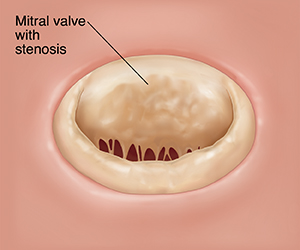
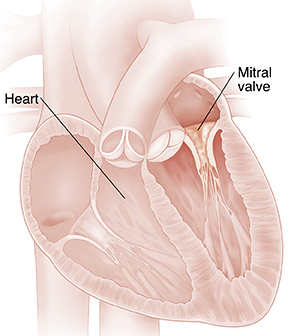
Mitral stenosis means the mitral valve stiffens and doesn’t open all the way. When it can't fully open, blood must move through a smaller opening. In severe cases, it can affect other organs and the rest of the body. Fluid and pressure can build up in the lungs. This can lead to coughing and breathing problems. Problems with the mitral valve can also cause a fast or irregular heartbeat (palpitations). Over time, mitral stenosis may slowly get worse.
Possible causes
Mitral stenosis is most often caused by rheumatic fever. This illness can lead to an inflammation that damages the heart valves. Other causes include mitral valve prolapse and heart defects from birth (congenital). Although pregnancy doesn’t cause mitral stenosis, symptoms may start during pregnancy if undiagnosed mitral stenosis is present. This is because the amount of blood the heart has to move has increased.
Treating mitral valve stenosis
If you don't have symptoms, you usually don't need treatment. If symptoms occur, your health care provider may prescribe medicines to help ease them. If the stenosis is severe, a procedure called balloon valvuloplasty can stretch the opening of the valve for short-term relief.
Heart surgery with valve replacement using either a tissue or mechanical valve is often the best long-term choice to manage this problem.
Online Medical Reviewer: Marianne Fraser MSN RN
Online Medical Reviewer: Rajadurai Samnishanth Researcher
Online Medical Reviewer: Terri Koson DNP RN ACNP
Date Last Reviewed: 02/01/2025
© 2000-2026 The StayWell Company, LLC. All rights reserved. This information is not intended as a substitute for professional medical care. Always follow your healthcare professional's instructions.