A condom is a sheath that forms a barrier between the penis and the vagina. Condoms can be used alone or with other forms of birth control to provide protection against pregnancy. When used correctly, latex condoms are the only form of birth control proven to protect against sexually transmitted infections (STIs).
Pregnancy rates
Talk with your doctor about the effectiveness of this birth control method.
Male condom
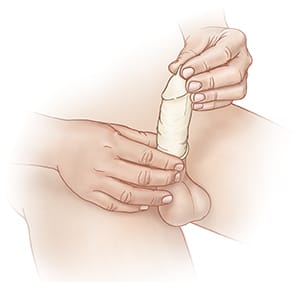
The male condom is common and easy to find. It fits over the penis. Most condoms for men are made of latex. Some are made of animal membrane or polyurethane.
Female condom
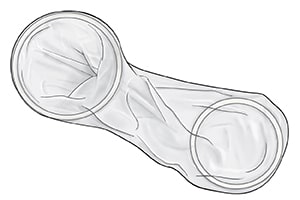
The female condom is made of polyurethane. It fits inside the vagina. A flexible ring holds the closed end in place over the cervix. Another ring holds the open end in place at the opening of the vagina. It can be inserted up to 8 hours before sex.
Using condoms
- Put the condom on before any contact between the penis and vagina.
- Follow package directions for putting on and taking off condoms.
- Don't use oil-based lubricants (such as petroleum jelly) with latex condoms because oil can damage latex. Instead, use water-based or silicone-based lubricants. Check the package labels.
- Never reuse condoms.
Pros
- Provides birth control right away.
- Both partners share responsibility.
- Easy to get. No prescription needed.
- Causes no known risks to general health.
- Easy to stop if you decide you want to become pregnant.
- Latex condoms are the best protection against STIs other than abstinence.
Cons
- Can interrupt sex.
- May decrease sensation.
- A latex allergy may restrict you to using condoms made of polyurethane or animal membrane. These are not as effective as latex against STIs.
Condoms may not be for you if you're not willing to interrupt sex to use them.
Featured in
Online Medical Reviewer: Donna Freeborn PhD CNM FNP
Online Medical Reviewer: Heather Trevino
Online Medical Reviewer: Irina Burd MD PhD
Date Last Reviewed: 09/01/2025
© 2000-2026 The StayWell Company, LLC. All rights reserved. This information is not intended as a substitute for professional medical care. Always follow your healthcare professional's instructions.