A person's monthly period (menstrual cycle) is controlled by changing levels of certain hormones. These hormones travel through the blood. Two hormones, estrogen and progesterone, play a big role in the menstrual cycle. They are made in the ovaries (where eggs are stored).
The menstrual cycle
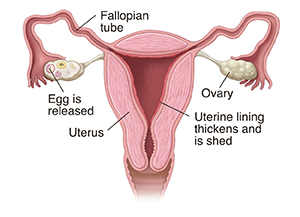
Hormones help the uterus get ready for pregnancy. The ovaries are stimulated to produce an egg through a complex hormonal process that includes the brain. The ovaries make the hormone estrogen. Once an egg is released from one of the ovaries, they make progesterone. After the egg is released, it goes through the fallopian tube. Then it enters the uterus. If the egg is fertilized, a person becomes pregnant. If this doesn't happen, the egg is shed along with the uterine lining. This occurs as progesterone levels drop quickly without pregnancy. This shedding leads to bleeding. This is called menstruation.
Symptoms you may have
During your period (menstruation), you may have different physical and emotional symptoms. These can include:
Physical symptoms:
-
Menstrual bleeding
-
Cramping
-
Headache
-
Breast soreness
-
Bloating
-
Increased and thickened vaginal mucus
Emotional symptoms:
-
Tiredness
-
Sadness
-
Feeling grouchy
-
Feeling moody
Featured in
Online Medical Reviewer: Daphne Pierce-Smith RN MSN
Online Medical Reviewer: Rajadurai Samnishanth Researcher
Online Medical Reviewer: Raymond Turley Jr PA-C
Date Last Reviewed: 01/01/2025
© 2000-2026 The StayWell Company, LLC. All rights reserved. This information is not intended as a substitute for professional medical care. Always follow your healthcare professional's instructions.