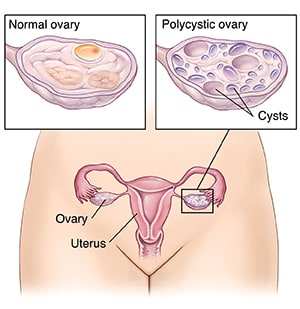
Your child has been diagnosed with a condition called polyendocrine metabolic ovarian syndrome (PMOS). PMOS is an imbalance of hormones. It used to be called polycystic ovary syndrome (PCOS). PMOS affects the ovaries, the organs that store the eggs. PMOS can also affect the rest of the body. It can lead to serious health issues if not treated. Treatment can't cure the problem. But it helps reduce symptoms and prevent health problems.
What is PMOS?
Androgens are a type of hormone (chemical messenger in the body). They are often called male hormones, but those who are biologically female make and use some of these hormones also. People with PMOS often have higher levels of androgens than normal. This can lead to changes in the body that include:
- Ovaries with many small, minor follicles (polycystic).
- Missed periods, irregular periods, or very light periods.
- Increased body hair growth.
- Weight gain.
- Acne, oily skin, and dandruff.
- Problems getting pregnant (infertility).
- Thickened or darkened skin patches.
Because of the hormone changes, people with PMOS are more likely to develop certain serious health problems. These include type 2 diabetes, high blood pressure, problems with the heart and blood vessels, abnormal cholesterol levels, and uterine cancer.
What causes it?
A child may be more likely to get it if a parent or sibling has the condition. But the exact cause of PMOS is not known.
How is it diagnosed?
There is no single test that can diagnose PMOS. A health history, physical exam, and blood tests help give the diagnosis. A pelvic exam may be done. Other tests, such as a vaginal or pelvic ultrasound, may also be done.
How is it treated?
Medicine is the most common treatment for PMOS. Medicines affect the body's hormone levels. The most common medicines used to treat PMOS include:
- Birth control pills (oral contraceptives). These have a combination of female hormones. They can help bring hormones back into balance and reduce or eliminate symptoms. This reduces the risk for endometrial cancer later in life. (A teen doesn't have to be sexually active to take birth control pills.)
- Insulin-sensitizing medicines. These are used to treat diabetes. They are often used to treat PMOS. These medicines help the body respond to insulin. In people with PMOS, they can help decrease androgen levels and improve ovulation. Restoring ovulation helps make menstrual periods regular and more predictable.
- Metformin. This is a diabetes medicine that has been shown to help with PMOS symptoms.
- Antiandrogens. These are medicines that can help reverse the effects of male hormones. They help reduce hair growth and clear acne. They are often combined with birth control pills.
In addition to medicine, regular exercise and healthy eating can help manage PMOS. PMOS makes losing weight much harder. But losing even a little weight can help reduce some PMOS symptoms. Talk with your child's doctor for more information on weight loss and PMOS.
Working with the doctor
There is no cure for PMOS. So, it's important to manage your child's condition. Keep in touch with your child's doctor. Be honest with the doctor about how the treatment is going and how your child is responding. Talk about any new changes. And take your child for regular follow-up visits. This helps to ensure that any health problems are found and managed.
To learn more
- PCOS Awareness Association at https://www.pcosaa.org/
- Endocrine Society at https://www.endocrine.org/topics
- Center for Young Women's Health at https://youngwomenshealth.org/
Featured in
Online Medical Reviewer: Daniel N Sacks MD
Online Medical Reviewer: Donna Freeborn PhD CNM FNP
Online Medical Reviewer: Heather Trevino
Date Last Reviewed: 07/01/2025
© 2000-2026 The StayWell Company, LLC. All rights reserved. This information is not intended as a substitute for professional medical care. Always follow your healthcare professional's instructions.